


Two Dots: Brain Puzzle Games
4.387.74K Reviews
App Specs
- Version
- 26.35.00
- Updated On
- License
- Free
- Downloads
- 50,000,000+
- Developer
- PlayDots
- Categories
- Board
- Platform
- Android, iOS
Screenshots
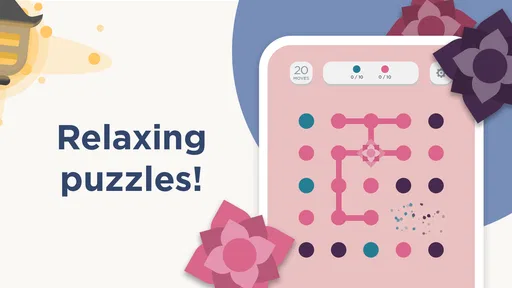
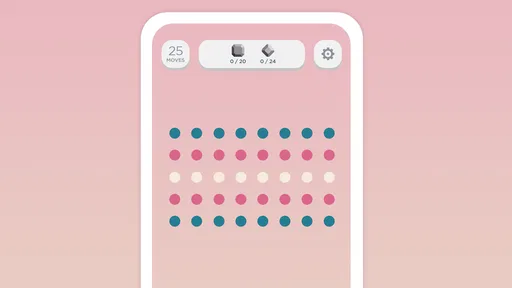
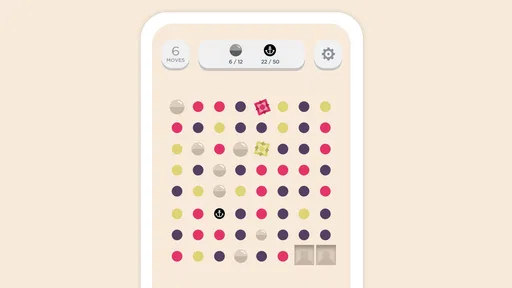
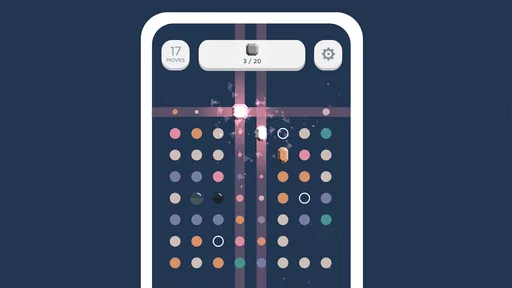
 Analysis by AppCompare
My strongest impression of Two Dots: Connect the dots is that it makes a simple matching idea feel calm without making every level effortless. I like it most as a short, focused break: the board is easy to read, but a limited set of moves can make each decision matter. It is a board puzzle game from PlayDots, and its appeal comes from that balance between an inviting look and puzzles that ask you to plan rather than swipe at random.
A small puzzle that rewards looking ahead
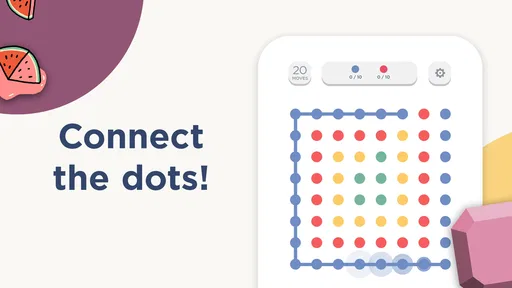
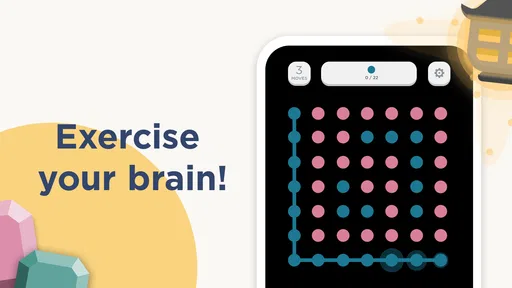
The basic rule is easy to learn: connect neighboring dots of the same color to clear them. The strategic twist is that making a square clears every dot of that color from the board, so a short route can sometimes do more than a longer chain. I find it useful to scan for possible squares before making the first move. That quick pause can reveal a stronger play than simply connecting the biggest group I see.
That decision-making is what separates Two Dots from a lot of familiar match-and-clear games. It is less about reacting quickly and more about reading the board, noticing what a move will leave behind, and adapting when pieces shift. You can play at your own pace, which makes it a comfortable choice when I have a few spare minutes and do not want a game that demands fast fingers or a long session.
How the challenge changes over time
Two Dots has been around since Nov 12, 2014, and its current version is 26.06.00. Its levels build on the same core idea with changing objectives and obstacles. Some boards ask for careful color matching; others make the layout itself the problem. The result is a game that can stay familiar without every puzzle feeling identical, though a level that blocks an obvious move can also feel stubborn when I am tired or rushing.
The obstacles reward different kinds of attention. Rather than treating every board as a race to clear the most dots, I try to identify the objective first and then decide which colors and spaces matter to it. If an obstacle needs several actions, spending a move on a tempting match elsewhere can leave me short later. Planning around the goal, not just the largest connection, is the most useful habit I have picked up.
Where the game fits into an ordinary day
In practice, I would choose Two Dots for a bus ride, a waiting room, or a quiet coffee break. A level gives me a contained task, and I can stop when I need to return to whatever I was doing. That makes it a better fit for scattered pockets of time than a game built around long story chapters or real-time competition. It is also a pleasant option when I want something more engaging than idle tapping but less intense than a timed action puzzle.
The visual style helps support that use. The clean board and bright colors make it easy to see possible connections, while the gentle presentation keeps the game from feeling frantic. I would not treat the soundtrack as a reason to play in every setting, but the overall atmosphere is suited to unwinding. If I need to keep my attention on conversation, reading, or work, though, even a relaxing puzzle is still a distraction; I save it for breaks rather than trying to play alongside another task.
Worth Reading Before You Choose

Flipboard Shows What News Apps Must Do Beyond the Feed

Switching to Android Auto Means Rethinking Your Driving Routine

Google Calendar Makes a Crowded Week Easier to Manage

Ludo King Makes the Most of the Minutes Between Plans

Baby Panda World Brings Quick Play to Modern Phones, but Its Game Library Feels Busy

ESPN’s Live Game View Makes Following Close Games Easier
What to expect from the free-to-play setup
The game is free to download, rated Everyone, and works on devices running Android 7.0 or later. Its average rating is 4.3 from around 1.2 million ratings, and it has over 50 million installs. Those figures suggest broad appeal, but they do not mean the pacing will suit everyone. In-app purchases range from $0.99 to $119.99 per item, so I would check purchase prompts carefully, especially if a child will be playing.
I would not assume that buying something is necessary to enjoy the puzzles. The game can be approached as a free casual diversion, while optional purchases are there for players who want extra help or other paid items. The trade-off is familiar in free mobile games: if a level has you stuck, paying for assistance may be tempting, but taking a break and returning with a fresh look is often the better first move. If you dislike purchase prompts or any progression that can make paid help feel appealing, that friction is worth weighing before you settle in.
What’s the Buzz about Two Dots?
So, what's making everyone rave about Two Dots? Imagine a game that’s easy to pick up but hard to put down. That’s the magic here. The game is all about connecting dots of the same color, but trust me, it’s not as simple as it sounds. As you progress, the puzzles get trickier, and the satisfaction of solving them gets even sweeter.
Gameplay and Mechanics
The core mechanic is straightforward: connect two or more dots of the same color to clear them from the board. The more dots you connect, the better. You can connect them horizontally, vertically, or even make squares for bonus points. There are over 3,000 levels, each one introducing new challenges and obstacles like fire, anchors, and ice. It keeps things fresh and exciting.
One of the things I love is how intuitive the controls are. Just swipe your finger to connect the dots, and you’re good to go. The game’s interface is clean, making it easy to focus on solving the puzzles without any distractions.
Visuals and Sound
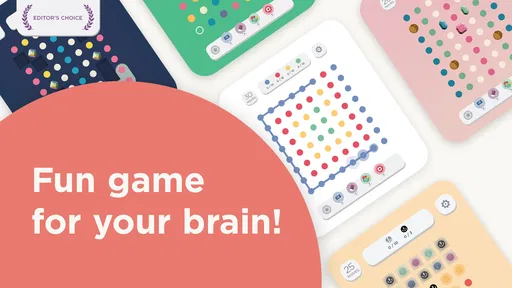
Visually, Two Dots is a treat. The minimalistic design combined with vibrant colors makes each level a pleasure to look at. The transitions between the different worlds are smooth and visually engaging. And let’s not forget the soundtrack. The calming and soothing background music perfectly complements the gameplay, making it an ideal stress-buster.
Challenges and Rewards
What’s a game without a few challenges, right? Two Dots introduces various obstacles that require you to think ahead and strategize. Whether it’s fire that spreads or anchors that pull down dots, each obstacle requires a unique approach. But don't worry, the game is generous with rewards. You earn power-ups like bombs and erasers to help you out when you're stuck.
Plus, there are daily challenges and special events that offer even more rewards. It’s a great way to keep the game interesting and gives you something to look forward to every day.
Why It’s Worth Your Time
Two Dots is a perfect blend of relaxation and brain-teasing fun. It’s the kind of game you can play during a coffee break or while chilling on the couch. The absence of intrusive ads is a big win, allowing you to immerse yourself fully in the game. And if you’re a fan of competition, you can sync the game with Facebook and challenge your friends to beat your high score.
For those who love a bit of a challenge, there’s an option to purchase additional lives or power-ups, but you can enjoy the game without spending a dime. It’s refreshing to see a game that respects players who choose to play for free.
Final Thoughts
To wrap it up, Two Dots: Connect the dots is a must-try for any puzzle game enthusiast. It’s got charm, challenge, and an inviting design that makes it a joy to play. Whether you’re new to puzzle games or a seasoned pro, Two Dots offers something for everyone. So, if you haven’t tried it yet, grab your phone, download it, and start connecting those dots. You won’t regret it!
Who will get the most from it
I would recommend it to anyone who enjoys visual pattern puzzles and likes improving through small decisions rather than learning a complicated control scheme. It can work well for younger players too, given its Everyone rating, but I would still keep an eye on purchase prompts when a device is shared with a child. For a relaxed solo game, the simple board and gradual increase in puzzle demands are a strong fit.
It is less suitable if you want a deep narrative, a social game built around live interaction, or a puzzle with a guaranteed new mechanic in every session. Two Dots relies on variations within a recognizable formula. That consistency is comforting when I want a familiar pastime; it can also feel repetitive if I am looking for constant novelty or a sense of discovery beyond the board.
Small choices that make a session smoother
When a level seems blocked, I find it helps to stop treating every available match as equally useful. First, I check the objective and identify which part of the board is most likely to prevent progress. Then I look for a square or a move that changes the board in a way that serves that goal. This is not a guarantee of success, but it avoids wasting moves on a satisfying-looking connection that does little to solve the actual puzzle.
I also prefer to use a power-up only after I have given the board a fresh read. A hint of impatience can make a player reach for help too quickly, especially after repeating a level. Pausing for a moment is free and often enough to spot a route I missed. If I am still stuck, using a tool can make sense, but I treat it as a limited resource rather than part of the standard solution.
One practical point for brief sessions: a level may take longer than expected if its objective requires several steps. I would start a new board when I have a little breathing room, rather than right before I need to put my phone away. That small adjustment keeps the game’s calm tone intact and avoids turning a relaxing break into an unfinished task nagging at me.
How it compares with other puzzle choices
Compared with match-three games that emphasize swapping pieces or timed rounds, Two Dots feels more deliberate. Its connected paths and square-making reward visual planning, so I can take a moment to inspect the board instead of chasing a countdown. Against number puzzles or word games, it is more immediately visual and less dependent on calculation or vocabulary. Those alternatives may suit someone who wants a denser logic challenge, while Two Dots is easier to enter when I want a light mental workout.
That approachable design comes with a trade-off: the core interaction stays recognizable. Players who love mastering a single mechanic may appreciate how the obstacles alter their plans, but people who need frequent changes in rules may prefer a puzzle collection with more distinct game types. I see Two Dots as a good middle ground between a quick casual match and a more demanding logic game, not a replacement for every kind of puzzle.
A few things to consider before installing
If you are deciding whether it belongs on your phone, the key question is what you want from a mobile game. For a quiet commute or a short wait, its pause-and-think rhythm is an advantage. For uninterrupted entertainment without purchase decisions, the optional in-app items may be a drawback even though the game is free. The listed purchase range runs from $0.99 to $119.99 per item, so I would avoid tapping through any checkout screen without checking the amount first.
It is also worth separating the game’s gentle presentation from the difficulty of every individual board. A soothing look does not mean every level is relaxing: an awkward objective can demand retries and patience. I would skip it if losing progress or getting stuck quickly makes me angry, or if I am specifically after a competitive experience with direct, live opponents. Its strengths are solo focus, clear visual feedback, and a satisfying little planning problem.
My recommendation
Two Dots earns its place as a dependable casual puzzle, especially for players who enjoy spotting patterns and making a few careful moves at a time. I like that it can fill a small gap in the day without requiring a large commitment, and that its basic rule leaves room for thoughtful play. The main caveats are the possibility of repetitive stretches, occasional frustrating boards, and the temptation of optional purchases when progress slows.
If that sounds like the sort of challenge you enjoy, I think it is worth trying as a free game and seeing whether its pace suits you. If you prefer fresh mechanics in every level, a story-led journey, or puzzles that never invite paid assistance, another style may be a better match. For everyone else, it offers an easy way to turn a spare moment into a small, satisfying exercise in planning.
Pros
- Engaging puzzles with increasing difficulty.
- Beautiful and minimalistic art style.
- No time limits enhances relaxation.
- Regular updates with new levels.
- Offline mode available for travel.
Cons
- In-app purchases can be expensive.
- Lives take time to regenerate.
- Ads can interrupt gameplay flow.
- Limited hints without purchase.
- Some levels feel repetitive.
FAQs for Two Dots: Brain Puzzle Games
What is the main objective of Two Dots?
Two Dots is a captivating puzzle game where the primary objective is to connect dots of the same color in a strategic manner. As you progress through its 4,000+ levels, the challenges increase in complexity, requiring players to think critically and plan their moves to complete various objectives such as sinking anchors or breaking ice blocks.
Is Two Dots free to play, and does it offer in-app purchases?
Two Dots is free to download and play, offering a variety of levels without cost. However, it includes optional in-app purchases for items like power-ups and extra lives. These purchases can enhance gameplay but are not necessary to advance in the game. Players can enjoy the full experience without spending money.
Does Two Dots require an internet connection to play?
Two Dots can be played offline, allowing you to enjoy the game without an internet connection. This feature is particularly beneficial for playing on the go, such as during commutes or flights. However, some functionalities, like syncing progress across devices, do require internet access.
How does the game ensure variety and prevent repetitiveness?
Two Dots maintains engagement by introducing new mechanics and challenges as players advance through levels. With frequent updates that add fresh content and seasonal events, the game keeps offering new experiences. This variety ensures players remain entertained and challenged throughout their journey.
What accessibility features does Two Dots offer?
Two Dots is designed with several accessibility features to accommodate different players. It includes visual aids like colorblind mode, which adjusts dot colors for better visibility. The game’s simple touch controls and minimalistic design further ensure that it is approachable for a wide audience, including those with limited gaming experience.


